
DATA MANAGEMENT/DATA GOVERNANCE IN THE CORPORATE AI ENVIRONMENT
When you decide to get serious about AI in your corporation
DATA GOVERNANCE/DATA MANAGEMENT IN THE CORPORATE AI ENVIRONMENT
By W H Inmon
Jamie Knowles, ERStudio, @semanticsarethesolution
There is much confusion in the world of corporate AI. The world has seen the public version of AI and is entranced by it. There is great demand to take the public version of AI into the walls of the corporation and allow the corporation to enjoy the same powers and privileges conferred by AI on the general public.
Bringing AI into the corporation is a different kettle of fish than using the public version of AI. In the public version of AI there is little or no maintenance. The public AI vendors do much (or all) of the behind the scenes activities that need to be done.
CORPORATE AI PROCESSING
But bringing the corporate version of AI into the corporation is a different story. There is the issue of confidentiality of corporate data. Whereas public data is not confidential, the corporation hardly wants its confidential data available to the public on the public LLM. And there is the issue of building and managing the private corporate LLM. The corporation is responsible for that activity, not the public vendor.
The challenge is that the corporation has never before been responsible for building and maintaining its own LLM. The corporation certainly has witnessed the building and management of structured, transaction processing systems. But the corporate LLM that is needed for AI in the corporation is very different from the structured, transaction processing systems that the corporation is used to handle. The activities of building and managing the corporate LLM are ENTIRELY different from the activities of data management and data governance that precede the building of the corporate LLM.
The most foolish thing a corporation can do is to try to employ the tools and techniques of data management and data governance that were learned in the structured world in the new world of the corporate LLM.
That approach is blatantly a failure.

DATA MANAGEMENT/DATA GOVERNANCE OBJECTIVES
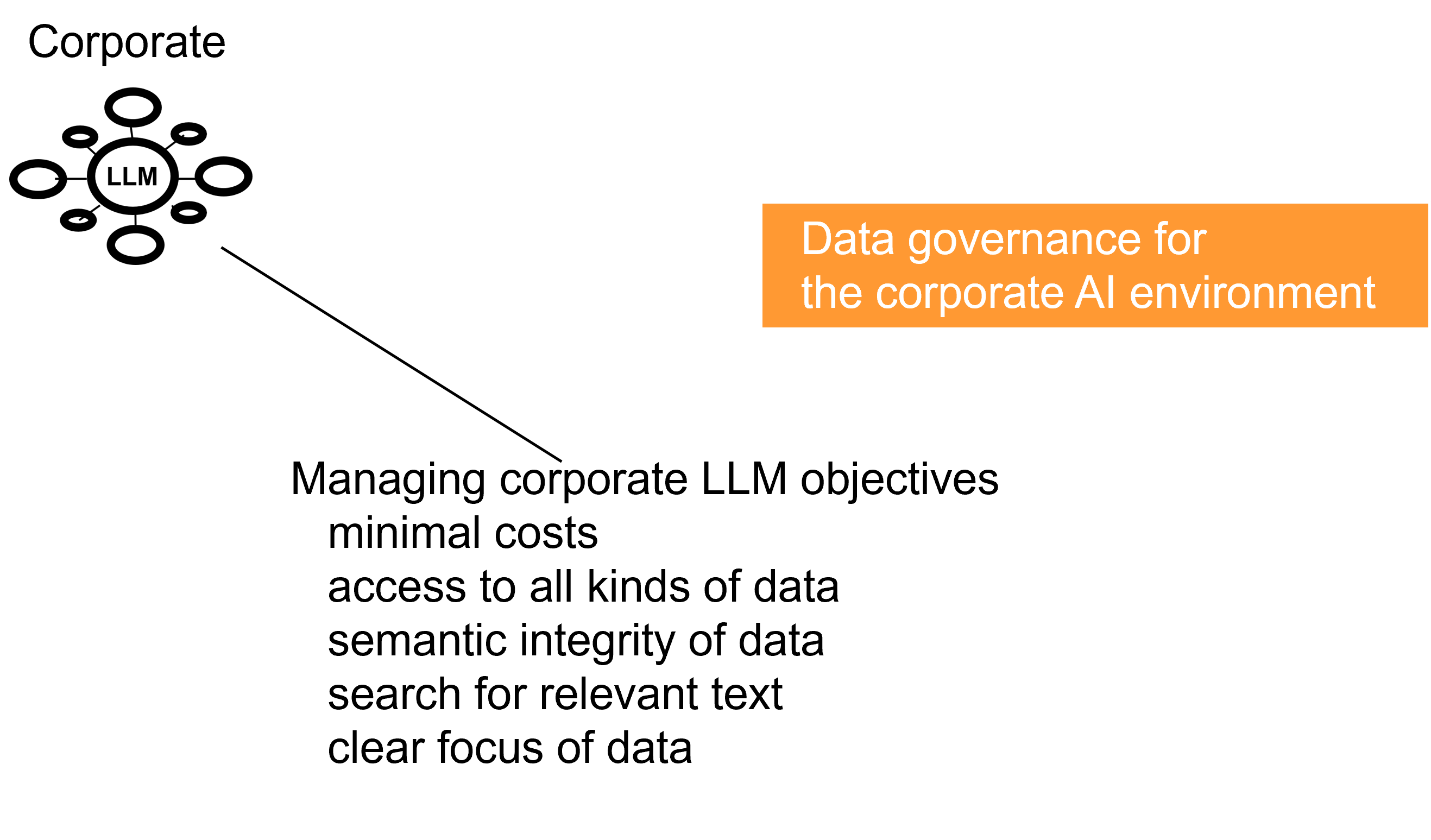
So what are the objectives of data governance and data management of the corporate LLM environment?
There are several objectives –
Affordability. The cost of AI query processing has got to be as low as possible in order to keep corporate LLM processing affordable. AI in the corporation becomes untenable if the costs of processing queries rises to a significant level
Access to all kinds of data. Access to both text and classical structured data bases are a necessity. The corporate LLM needs to be able to process not just text, but the core data wrapped up in the structured, transaction based corporate data bases. The processing of corporate structured data bases carries with it an issue. That is the issue of security. SOME, but not all corporate structured data belongs on the public domain of the corporation. But a lot of data found in the corporate, structured data bases does not belong anywhere other than the data base is which it was recorded. So security of data and privacy of data becomes an issue in the bringing of corporate, structured data to the corporate LLM.
Semantic unification of the meaning of data across the organization. The semantics of the corporate AI world need to be aligned with the semantics of the structured world. Without a semantic alignment of data across the corporation the corporation turns into the Tower of Babel. It is noted however that not all data needs to fit beneath the corporate semantic umbrella. Only the core data of the corporation belongs there. The modern world of core corporate data is centralized at the semantic level, not the physical level, as it once was. Without semantic unification of core corporate data, AI coupled with structured systems becomes a Tower of Babel.
The ability to search such sources as the Internet for large documents that may hold relevance to the corporate LLM.
The need to create focus the data found in the corporate LLM. The corporate LLM does not need to become a polyglot of every kind of information in the world. Instead, the corporate LLM needs to be focused on its intent and on its usage. The corporate LLM needs to be dedicated to the business needs of the corporation.
It is hard to say which of these objectives of data management and data governance is more important. The truth is that they are ALL important. They are important in different ways. But they nevertheless are all important.
That then is the objective of data management and data governance in the corporate LLM environment
.PROACTIVE MANAGEMENT
In order to achieve these objectives, it is necessary to have proactive management of the building and maintenance of the corporate LLM environment. The corporate LLM serves as the brain center of the AI processing that takes place in the corporation. Merely finding some raw text and feeding the raw text to the RAG of the corporate LLM is not adequate for the management of the corporate LLM environment. There needs to be thought and purpose to the text fed to the corporate LLM.
There are many ill advised consequences of just feeding unvetted raw text to the private, corporate LLM. It is the job of the data management and data governance organization to protect and focus the corporate LLM appropriately.

CONTRASTING DATA MANAGEMENT/DATA GOVERNANCE IN THE DIFFERENT ENVIRONMENTS
The management and governance of data in the corporate LLM environment is philosophically different from the tasks of classical data management and data governance in the structured environment.
Data in the structured, transaction oriented environment is managed directly. Data models are built. Data bases are designed. DDL is created and so forth.
Management activities are done directly on data in the structured data management/data governance world.
But in the corporate LLM data governance/data management world, activities are done indirectly. This is because AI has taken over many of the tasks that were traditionally done by the data architect by hand. In the world of the corporate LLM, data management/data governance is done indirectly, not directly

.MANAGING THE COST OF CORPORATE AI
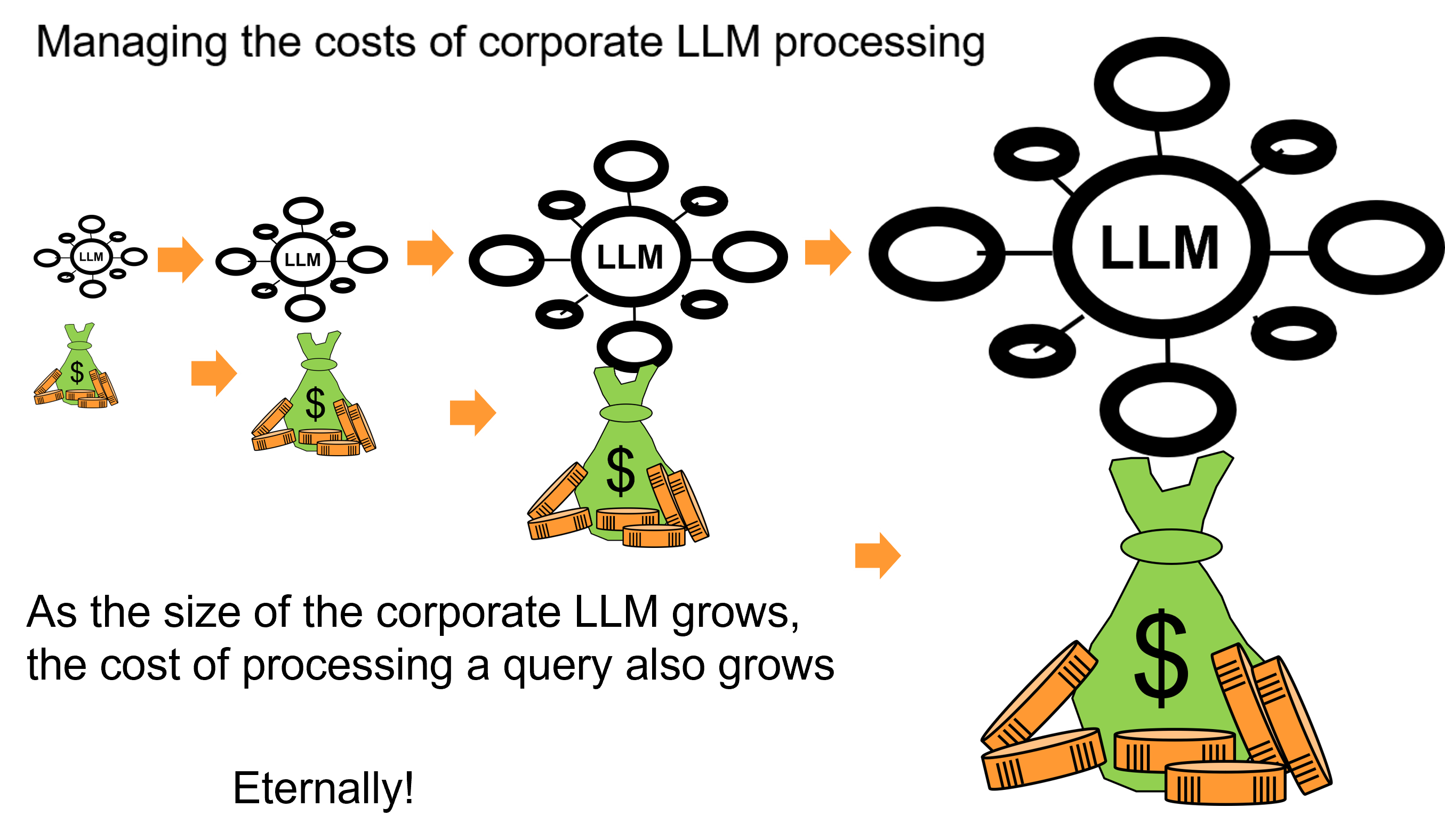
The first and most obvious objective of the data architect in the corporate LLM world is that of the need for the management of the costs of doing corporate AI processing. If the costs of processing rise too high, then the cost of analysis starts to become more expensive than the business payback. At this point the corporate LLM and AI infrastructure becomes a liability, not an asset.
The center of the universe of the corporate AI world is the corporate LLM. The corporate LLM takes raw text and converts that text into tokens. The corporate LLM achieves this transition by passing the raw text to a RAG. The tokens produced by the RAG are then used in the analytics of the queries that are sent to the corporate LLM.
The corporate LLM is constantly having more raw text fed to it. As such the corporate LLM is eternally growing. And as the corporate LLM grows, so grow the costs of doing analytical processing against the corporate LLM.

And as the corporate LLM grows, so grows the cost of processing. Each new addition of raw text to the corporate LLM increases the cost of processing the query, or prompt.
The result is – if the data architect wants to keep the costs of processing queries to a reasonable level, the data architect must keep the corporate LLM to as small a size as is workable
.SEPARATING BUSINESS RELATED TEXT FROM BUSINESS IRRELEVANT TEXT
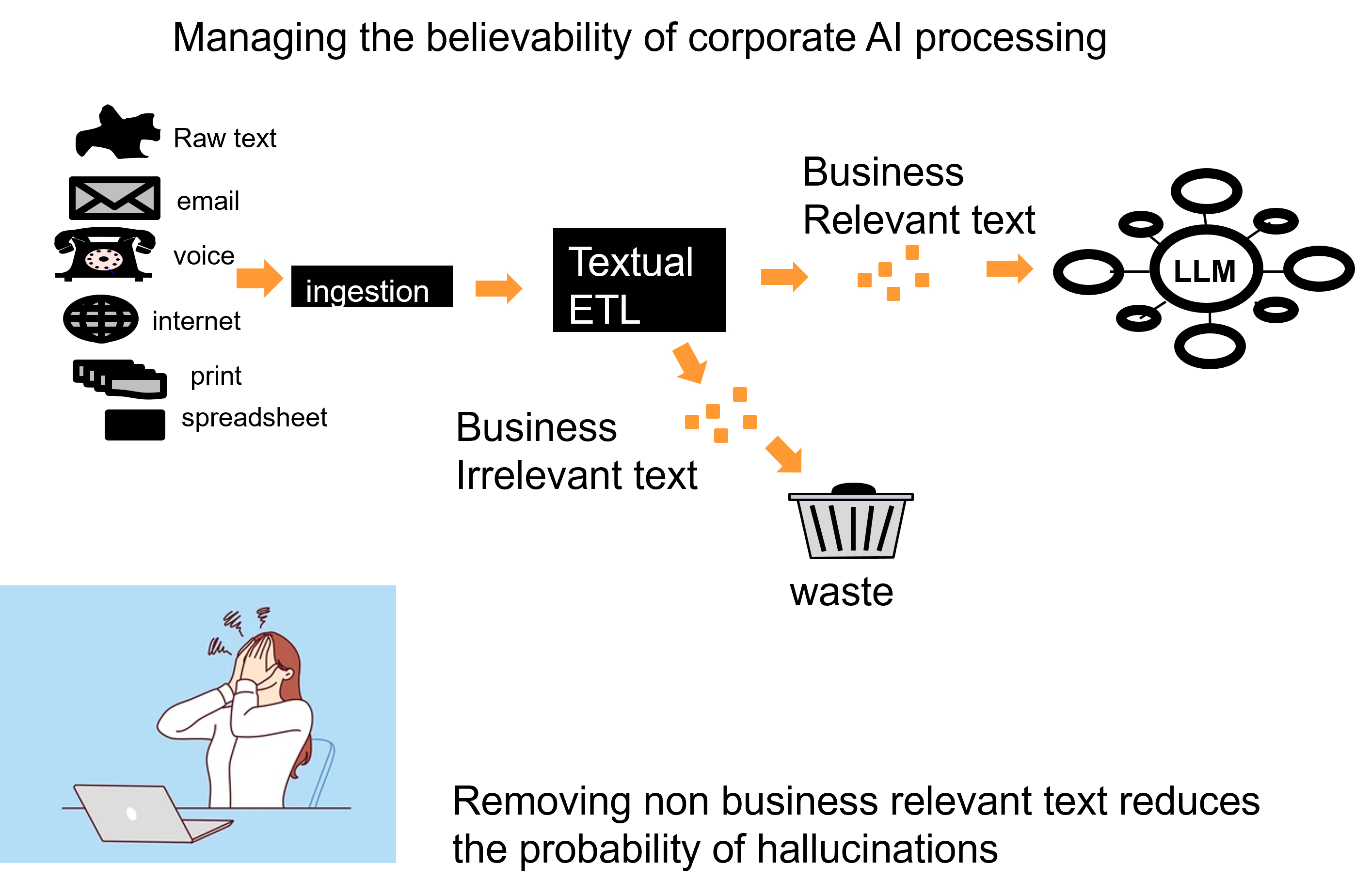
The best way to keep the corporate LLM at a minimal size is to ensure that no extraneous, non business related, irrelevant text is ever submitted to the corporate LLM. In doing so the corporate LLM is kept to the minimum effective size and operates as efficiently as is possible. In addition, the corporate LLM should not be fed repetitive text. Repetitive text only bloats the corporate LLM and makes processing more inefficient.
Fortunately, there is an easy way to accomplish this separation of raw textual data before it enters the corporate LLM. The raw text that has been gathered is passed through textual ETL. Textual ETL analyzes the text. Text that is business related is passed on to the corporate LLM. Text that is not related or relevant to business is ignored and is not passed on to the corporate LLM. In doing so the size of the corporate LLM is kept to a minimum.
In addition textual ETL edits the input to the corporate LLM and ensures that no duplicate data is being fed to the corporate LLM.
The type and format of the document is irrelevant. Textual ETL handles all text types and all formats.

SEPARATING BUSINESS RELATED TEXT FROM BUSINESS IRRELEVANT TEXT
The best way to keep the corporate LLM at a minimal size is to ensure that no extraneous, non business related, irrelevant text is ever submitted to the corporate LLM. In doing so the corporate LLM is kept to the minimum effective size and operates as efficiently as is possible. In addition, the corporate LLM should not be fed repetitive text. Repetitive text only bloats the corporate LLM and makes processing more inefficient.
Fortunately, there is an easy way to accomplish this separation of raw textual data before it enters the corporate LLM. The raw text that has been gathered is passed through textual ETL. Textual ETL analyzes the text. Text that is business related is passed on to the corporate LLM. Text that is not related or relevant to business is ignored and is not passed on to the corporate LLM. In doing so the size of the corporate LLM is kept to a minimum.
In addition textual ETL edits the input to the corporate LLM and ensures that no duplicate data is being fed to the corporate LLM.
The type and format of the document is irrelevant. Textual ETL handles all text types and all formats.
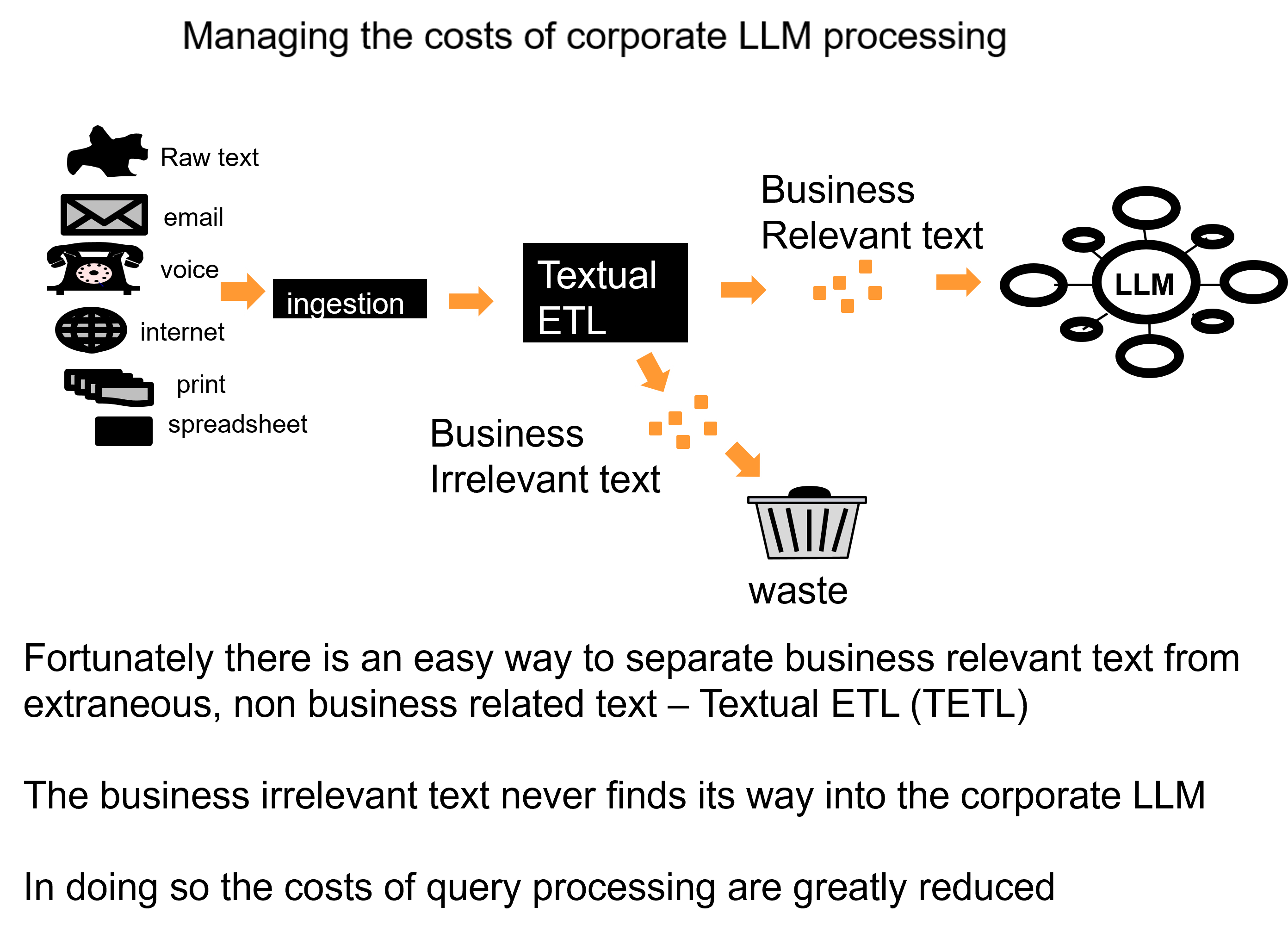
The net effect of passing raw text through textual ETL in order to separate out business relevant text from business irrelevant text first is to greatly reduce the cost of processing. Textual ETL acts as a preprocessor to raw text. Textual ETL filters the raw text and makes the corporate LLM much more efficient and much more effective. In a word, textual ETL focusses the data found in the corporate LLM environment.
FLAB
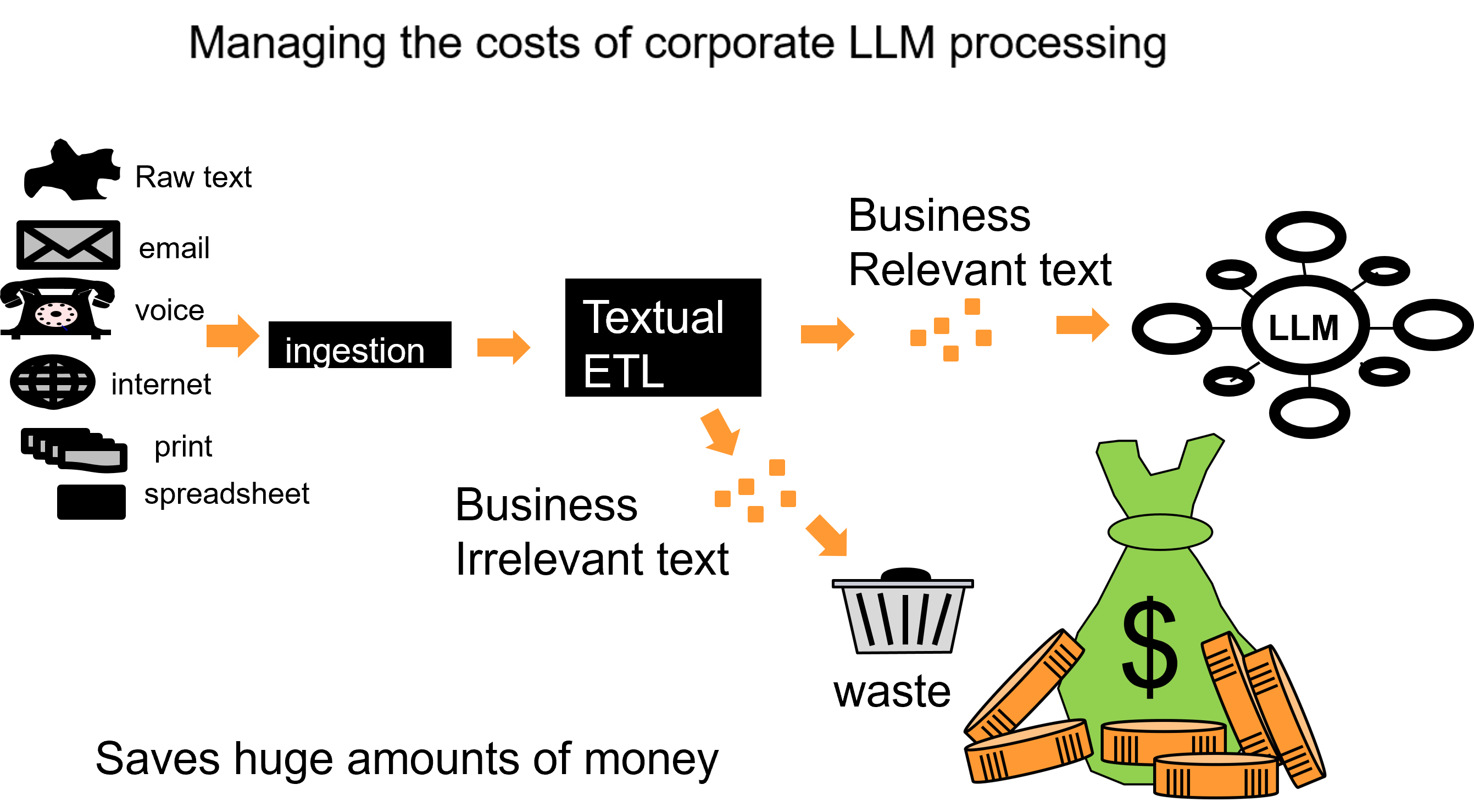
Another way of understanding the value of removing non business related text from the corporate LLM is to consider that extraneous, non business related text is flab – non productive fat that has to be processed every time a query is issued.
If the cost of processing flab had to be born only a few times when a query is processed, then the cost might not be considered to be high. But the truth of the matter is that flab has to be processed EVERY TIME a query is processed.
As such even a small amount of flab amounts to increased processing costs over time, especially as the volume of flab grows in size

.REDUCING HALLUCINATIONS
But there is another benefit to the removal of flab from the corporate LLM. That benefit is the reduction of hallucinations that might occur in the answers provided by the corporate LLM. By removing text that never belonged in the corporate LLM in the first place, textual ETL reduces the probability of hallucinations that might occur in processing the corporate LLM.
THE CONTEXT CATALOG
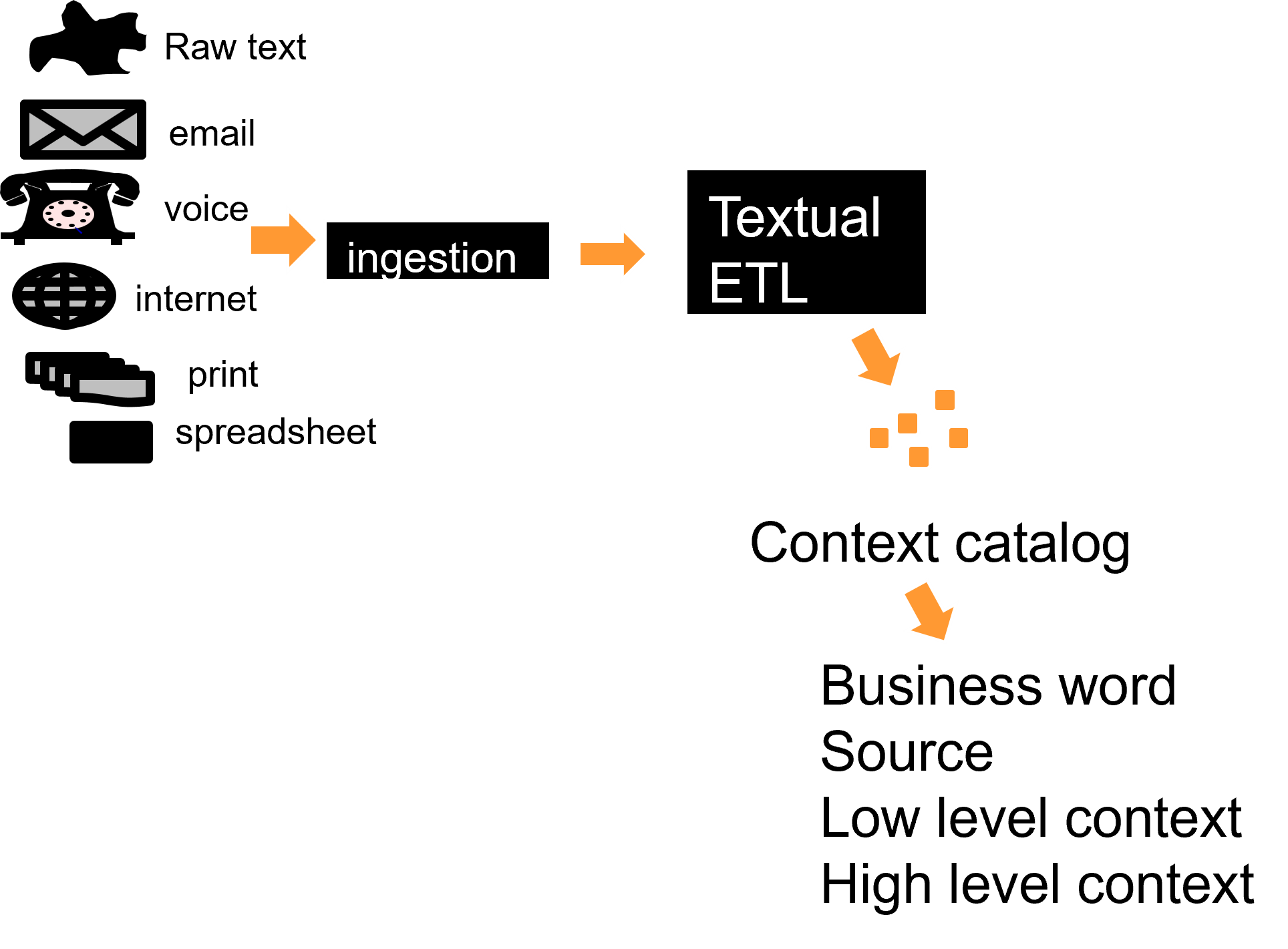
One of the more useful reports that is generated by TETL is that of the context catalog. The context catalog contains the words that have been selected as words important or relevant to business from the source documents that have been read. The source of the words are captured at the same time as the word is captured. In addition, the low level context of the word (or the immediate context of the word) is ascertained. Then the high level context is identified.
As an example of the different levels of contextualization, suppose the word “aspirin” is captured in a medical document. The low level context of aspirin might be analgesic. And the high level classification might be medication.
The words and their descriptive assessment of their context are then placed in the context catalog.
The context catalog is useful to data administrator because it gives the data administrator the opportunity to examine and correct the text that is going to be fed to the corporate LLM. This puts the data administrator in a proactive position of managing the corporate LLM. If the word has been incorrectly contextualized, then the data administrator can change the interpretation of the contextualization before it ever enters the corporate LLM.
As an example of what might be found in the context catalog, consider the three entries found in the following figure.
The same word – “fire” - has been found in three different documents. In one document the word fire refers to a conflagration. In another document, the word fire refers to the termination of employment of an individual. In yet another document the word fire refers to the shooting of a gun.
If the proper context of “fire” is conflagration but the system has interpreted it as the termination of an employee, the data administrator has the opportunity to make the correction before the raw text is entered into the corporate LLM by examining the context catalog.

FROM GOVERNING INFORMATION TO GOVERNING MEANING
The objective of Textual ETL and the Context Catalog is to ensure that enterprise AI is provided with trusted, relevant and authoritative information. This represents a significant advancement over traditional approaches in which AI systems consume large collections of unfiltered documents.
However, governing information is only the first step.
Enterprise AI must also understand what that information means.
A corporate AI system does not simply retrieve facts. It reasons about customers, products, suppliers, contracts, employees, financial transactions and countless other business concepts. If those concepts are interpreted inconsistently, AI responses will also become inconsistent.
Traditional data governance has long recognized the importance of establishing common business definitions across the enterprise. Corporate AI extends this requirement. Enterprise meaning must now be governed with the same discipline as enterprise data.
This requires more than managing documents. It requires governing the business concepts, relationships, policies and metadata that define how the enterprise conducts its business.
The Enterprise Semantic Backbone provides the semantic framework through which this semantic unification is achieved. Rather than allowing AI to infer enterprise meaning from generalized public knowledge, the Enterprise Semantic Backbone enables the enterprise to explicitly define how information should be interpreted.
In this way, governance evolves beyond controlling what information enters the AI environment. Governance also determines how that information is understood.
The result is enterprise AI that reasons according to the language, policies and business semantics of the organization rather than relying solely upon generalized knowledge.
THE ENTERPRISE SEMANTIC BACKBONE
One of the greatest challenges facing enterprise AI is semantic consistency.
A Large Language Model possesses an extraordinary understanding of general knowledge. However, it does not understand how an individual enterprise defines its business. Every organization develops its own terminology, business rules and operational relationships.
For example, one organization may define a Customer as an individual, while another defines a Customer as a legal entity. Some organizations distinguish between Customer, Client and Account. Others treat these terms as equivalent. Employees understand these distinctions because they have learned the language of the enterprise. AI has not.
Without explicit guidance, AI is forced to infer enterprise meaning from its general understanding of the world. Governance should never depend upon statistical inference where authoritative business knowledge already exists.
The enterprise must teach the AI.
An Enterprise Semantic Backbone provides the governed semantic framework through which the semantic unification described earlier can be achieved. In many organizations, the Enterprise Logical Data Model provides the foundation for this Semantic Backbone, organizing the business concepts that define how the enterprise operates.
Rather than documenting isolated definitions, the Enterprise Semantic Backbone provides a connected understanding of the enterprise. A business concept such as Customer is understood not only by its definition, but also by its relationships with Orders, Contracts, Products, Suppliers and every other significant concept within the business.
This governed semantic framework provides the semantic unification required for enterprise AI to reason consistently across structured data, documents and enterprise knowledge.
In many organizations, this Enterprise Semantic Backbone is authored and governed using an enterprise data modeling platform such as ER/Studio.
METADATA AS THE FOUNDATION OF AI GOVERNANCE
Metadata has always been fundamental to data governance. Within enterprise AI, metadata becomes even more important because it provides the context required for trustworthy reasoning.
When AI retrieves information, it should not simply determine whether a document contains relevant text. It should also understand the characteristics of that information.
Governance metadata may identify:
· ownership
· stewardship
· security classifications
· regulatory requirements
· confidentiality
· business rules
· lineage
· quality
· lifecycle status
· confidence
This metadata allows AI to distinguish between authoritative information and information that should be treated with caution.
Governance is established against the Enterprise Semantic Backbone, where the meaning of each business concept is precisely defined and unambiguous. Classifications, security policies, regulatory requirements and stewardship responsibilities are associated with these governed business concepts rather than with individual physical data assets. As databases, documents and AI knowledge sources are mapped to the corresponding business concepts, they inherit a consistent set of governance policies across the enterprise.
In this way, metadata becomes the operational mechanism through which governance is consistently applied across enterprise information.
READING THE CORPORATE DATA BASE
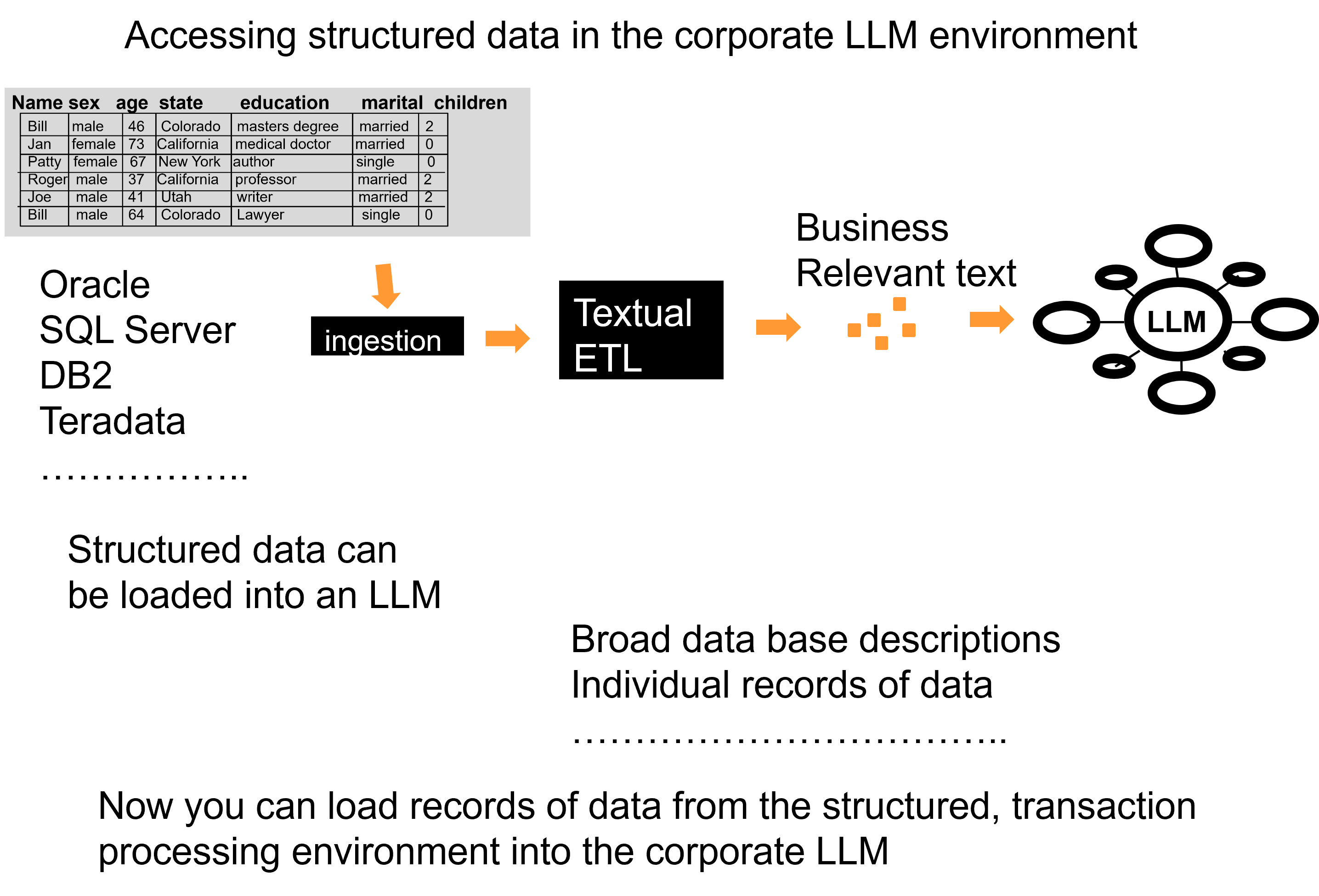
Another feature of textual ETL is the ability to go and read data out of a corporate structured transaction oriented data base and prepare it for consumption in the corporate RAG module.
The corporate structured data bases that can be read and transported to the corporate LLM include such data bases as SQL Server, Oracle, Teradata, DB2, Postgres and others.
Data can be read from those data bases and presented to the corporate LLM.
The standard records from the structured, transaction oriented data bases can be read and presented to the corporate LLM in two manners –
1) A profile of the data base in its entirety. In this case the corporate LLM system is presented with such things as total number of records, minimum/maximum values, and so forth
2) The ability to go and access individual records in these structured, transaction data bases and the presentation of these individual records to the corporate LLM.
One of the more important issues in the movement of data from a corporate data base to the corporate LLM is that of privacy and security. For many very good reasons, some data from a corporate structured data base should never be placed in the corporate LLM. Consider a person’s balance of money in a bank account. That sort of information should never be placed in a corporate LLM.
But there are a lot of other kinds of data that are very appropriate for entry into the corporate LLM.
The security for structured, transaction oriented data being passed to the corporate LLM exists at two levels – the system level and the administrative level. If the system protects the data base, then textual ETL does not access it. But even if the data base can be accessed, the administrator can determine which attributes and keys can be accessed by textual ETL and which cannot be accessed
.The ability to read a classical structured, corporate, transaction based data base adds great range to the analytical capabilities of the corporate LLM. Without this capability the range of queries that the corporate LLM environment can process is limited to information that is found in text. Being able to include structured information in the corporate LLM opens up a world of new possibilities for analysis.
There are many important reasons why being able to include corporate, structured, transaction data in the corporate LLM is vital. But the main reason has to be that there is MUCH – if not the majority – of corporate, structured, transaction data that contains business value. While there indeed is data that contains business value in text, the details of the day to day running the organization and the financial activities of the corporation are found in the corporate, structured, data bases. For this reason alone, it is vital that the data be included in the corporate LLM.
Stated differently, if the corporate LLM does not include appropriate data from the structured data base environment, then the corporate LLM is only capable of providing a limited amount of business value

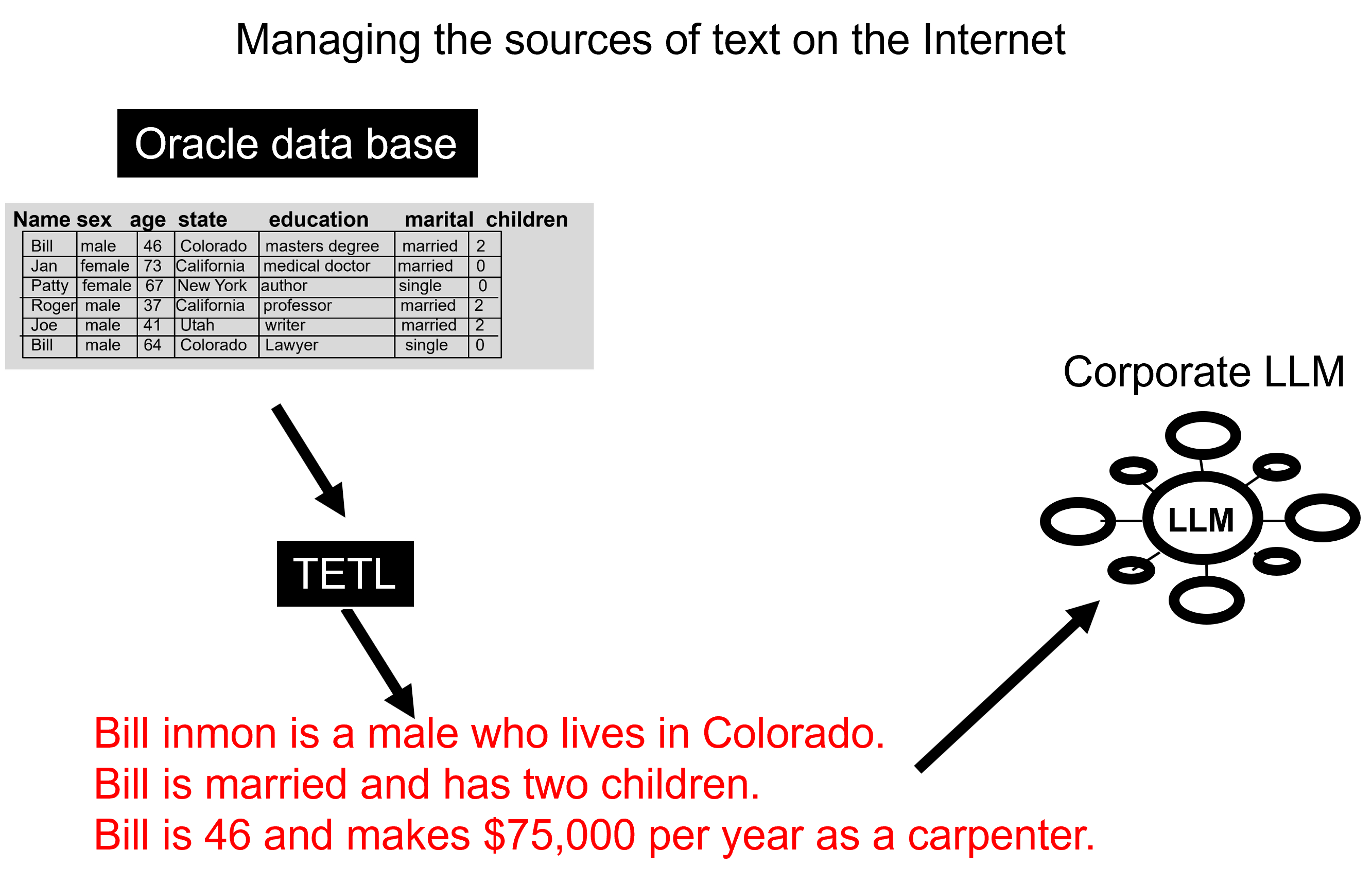
.As an example of what a transition from a standard structured data base to the corporate LLM might look like, suppose the analyst has done a search for the banking record for Bill Inmon.
The banking record is in an Oracle data base.
The record is found. The keys and the attributes of the record are accessed. The system determines which attributes can be accessed and which cannot be accessed. The values that can be accessed are then turned into text, which is then fed to the corporate LLM. The administrator protects the attributes that need protection. Only the attributes that can be placed in the corporate LLM are allowed in.
DOCUMENT SEARCHES
Yet another capability of textual ETL is that of being able to search the Internet and find documents that are candidates for providing text to the corporate LLM.
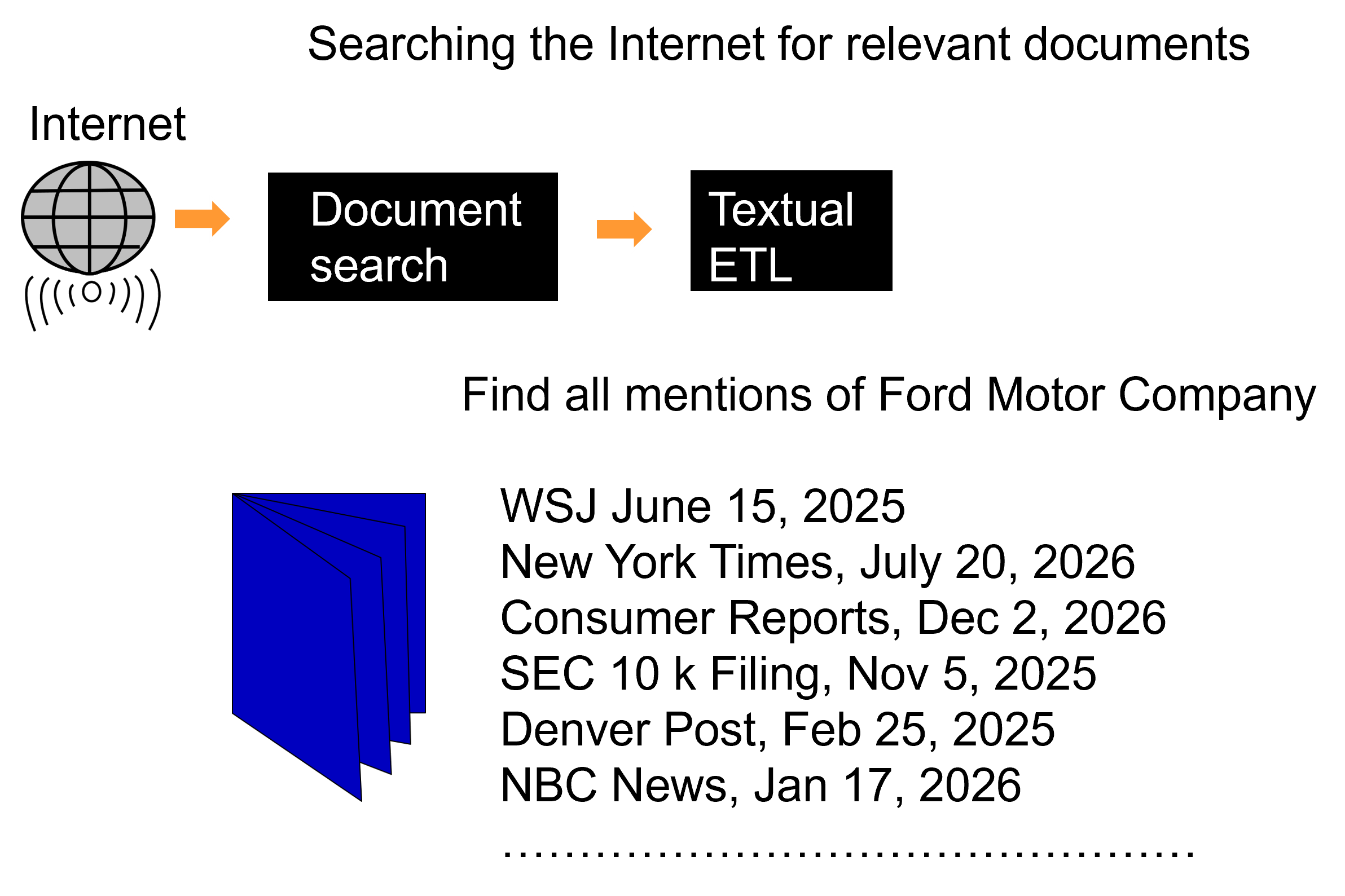
In this case the analyst would provide the name that is of interest. For example, the analyst might choose Ford Motor Company. The Internet gathering program would then go look for as many occurrences of Ford that can be found on the Internet. The search of the Internet is done not just on the name “Ford”, but on the many permutations of Ford as are known.
When found, the documents on the Internet are then secured and are made available to textual ETL.
Textual ETL then uses the document as input and separates business related data from non business related data, and passes the business related data off to the corporate LLM
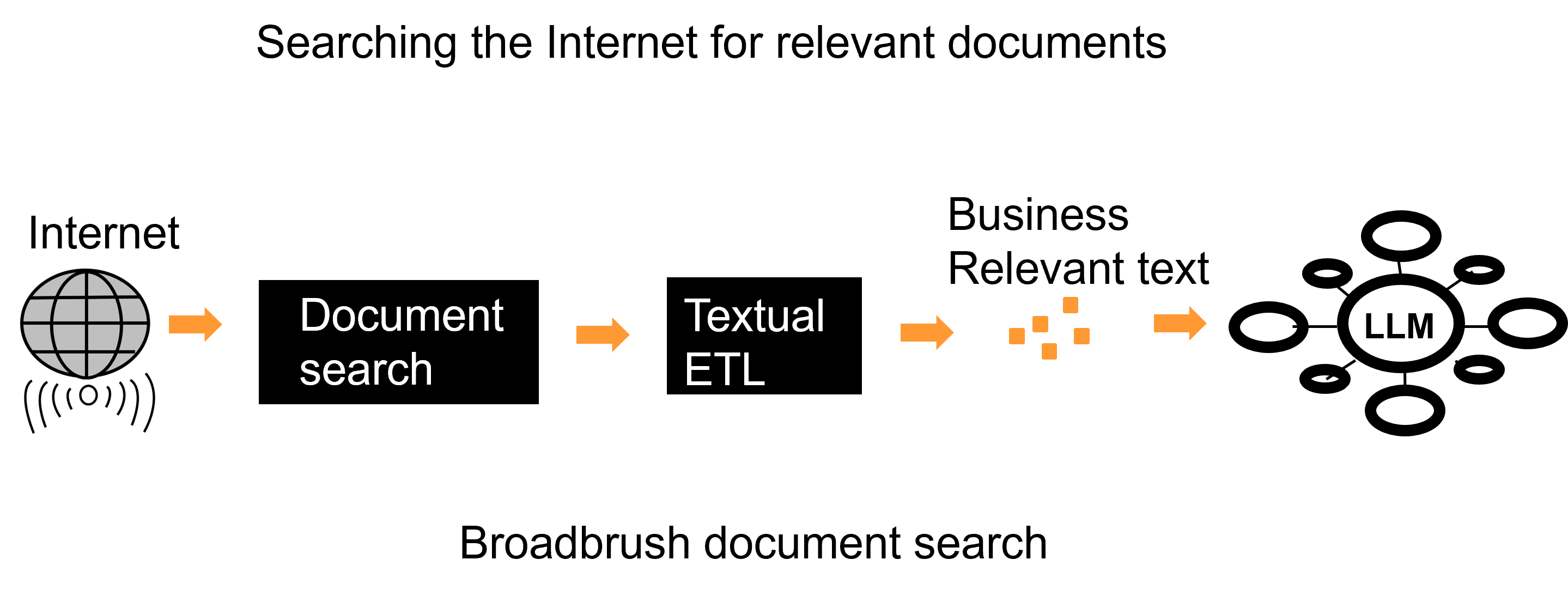
.It is noted that in the case of Ford Motor Company that permutations of the name Ford Motor Company – Ford, FMC, etc. are searched
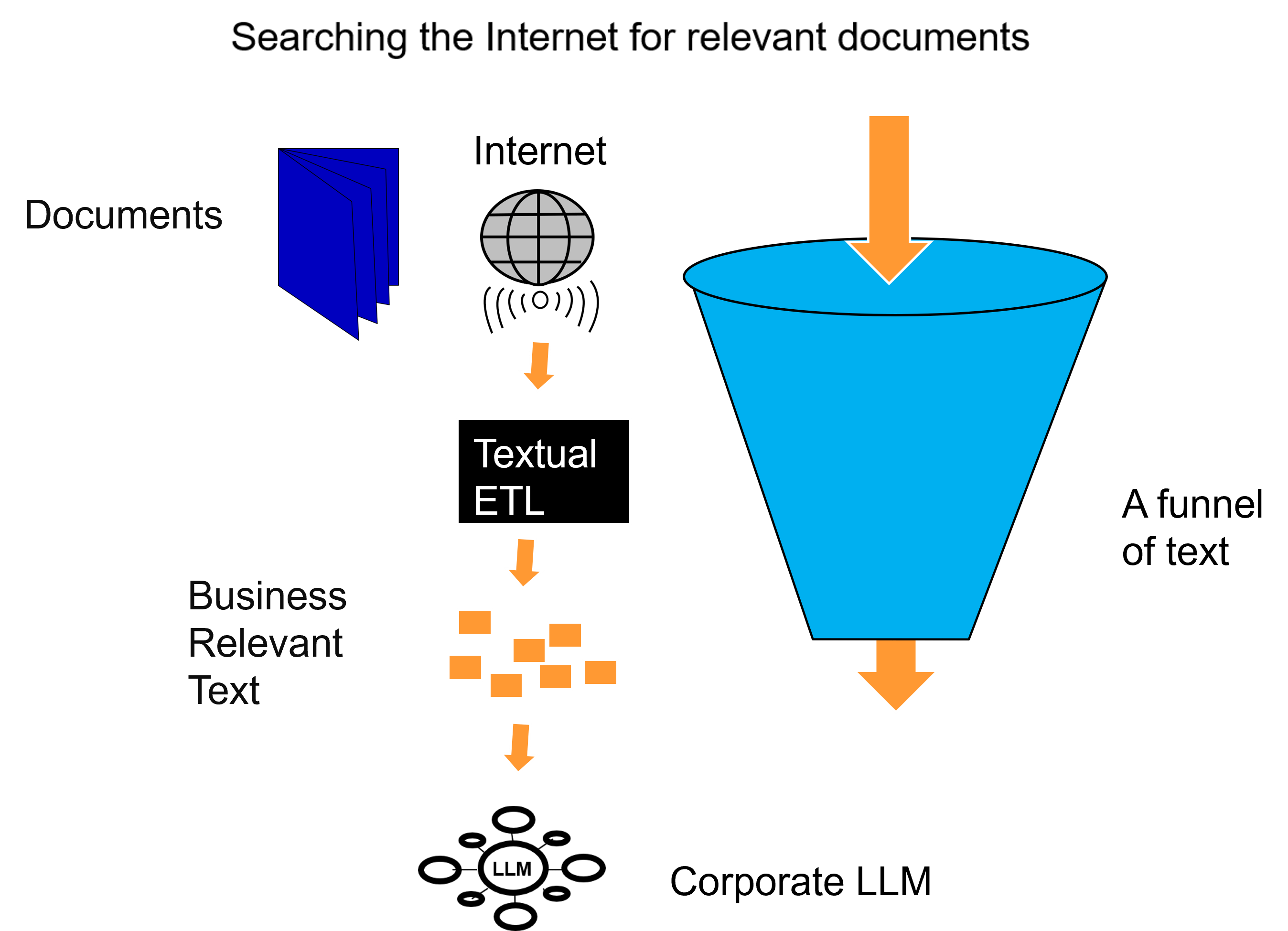
.By passing the documents that have been found through textual ETL, the effect is a funnel effect. First the entire document is accessed, then the business related text is squeezed from the document
.
These then are a few of the tools needed for management and governance of the corporate LLM environment that are provided by LLM MGMT and ERStudio
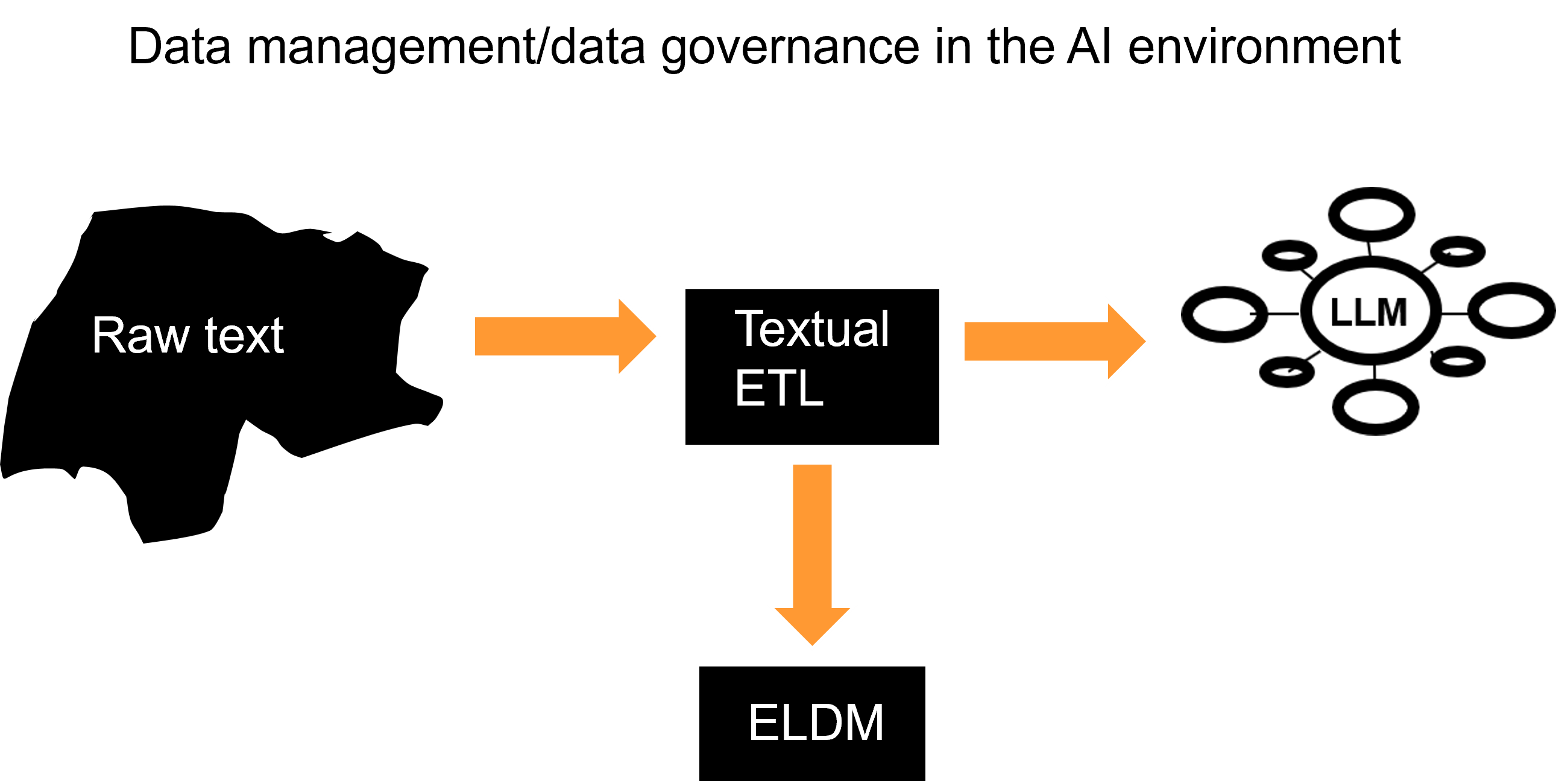
.The tools for doing data administration and data governance are shown
in the diagram.
THE FOUR PILLARS OF CORPORATE AI GOVERNANCE
Traditional data governance focuses primarily on structured data. Enterprise AI significantly expands the scope of governance. Information used by AI now includes structured databases, unstructured documents, external information sources, enterprise policies and business knowledge. As a result, corporate AI governance must address four related domains.
Enterprise Data
Data quality, ownership, lineage, security and regulatory compliance continue to provide the operational foundation for enterprise AI.
Enterprise Knowledge
AI consumes far more than structured data. Policies, procedures, contracts, reports and technical documentation all become enterprise knowledge that must be governed before AI can consume it.
Enterprise Meaning
Enterprise AI must understand the meaning of enterprise information. The Enterprise Semantic Backbone provides the semantic unification that allows business concepts to be interpreted consistently across structured data, documents and AI knowledge sources.
AI Interaction
Governance extends beyond information to the operation of AI itself. Organizations must govern prompts, retrieval strategies, approved knowledge sources, response validation and continuous improvement.
Corporate AI governance therefore governs not only enterprise information, but the complete environment in which enterprise AI learns, reasons and responds.
GOVERNANCE ROLES AND RESPONSIBILITIES
Corporate AI governance introduces responsibilities beyond traditional data stewardship.
Organizations must determine which documents are authoritative, which external information sources are trusted, who approves enterprise business definitions, who validates AI-generated responses and how semantic consistency is maintained across structured and unstructured information.
These responsibilities require close collaboration between business experts, data architects, governance professionals and AI practitioners.
Corporate AI governance therefore becomes a multidisciplinary responsibility rather than solely a data management function.
GOVERNING THE AI KNOWLEDGE LIFECYCLE
Corporate AI governance is not a one-time implementation effort. Enterprise knowledge continually evolves as new information is created, business policies change, regulations are updated and products evolve. Governance must therefore be viewed as a continuous lifecycle.
Knowledge is acquired from internal and external sources and evaluated through the Textual ETL process. Relevant information is incorporated into the Context Catalog, while business experts validate its meaning and context. Information is then mapped to the Enterprise Semantic Backbone, where governance policies, classifications and stewardship responsibilities are consistently applied.
Governance continues after deployment. Enterprise knowledge changes over time, requiring new information to be incorporated, obsolete information to be retired and AI responses to be continually monitored to ensure they remain accurate and aligned with current business practices.
Corporate AI governance is therefore a continuous process of acquiring, governing and maintaining enterprise knowledge so that AI remains trustworthy as the business evolves.
MEASURING THE SUCCESS OF AI GOVERNANCE
Like all governance programs, corporate AI governance must demonstrate measurable business value.
The effectiveness of corporate AI governance should be measured not only by the quality of AI responses, but also by the maturity, adoption and business value of the Enterprise Semantic Backbone that supports enterprise AI. As the Enterprise Semantic Backbone becomes a trusted enterprise asset, it enables consistent governance, the uniform application of security and regulatory policies, improved interoperability and more reliable AI outcomes across the organization.
Examples include:
· Reduction in AI hallucinations.
· Reduction in token consumption through Textual ETL.
· Increased use of authoritative enterprise knowledge.
· Improved consistency of AI responses.
· Increased coverage of enterprise information mapped to the Enterprise Semantic Backbone.
· Increased reuse of governed business concepts across applications, analytics and AI initiatives.
· Increased confidence in AI-generated recommendations.
· Faster access to trusted enterprise information.
· Reduced risk of exposing sensitive information to unauthorized users or AI applications.
· Improved business adoption of enterprise AI.
Successful governance does not restrict AI. It enables enterprise AI to operate safely, consistently and with confidence across the organization.
IMPLEMENTING CORPORATE AI GOVERNANCE
Textual ETL can read and accept raw text from any source in any language and in any format. The raw text is read and separated. Business irrelevant text never finds its way into the corporate LLM.
The Internet can be scanned and documents can be collected and sent to textual ETL. The document is read and business irrelevant data is removed from the stream of text entering the corporate LLM.
Corporate transaction data bases can be read and data that is appropriate can be read from the data base and passed to the corporate LLM. In doing so the type of data that can be encompassed by the corporate LLM is greatly enhanced.
The data, its context and its discovered business semantics can then be reviewed and incorporated into the Enterprise Logical Data Model maintained within ER/Studio, where they become part of the organization’s governed Enterprise Semantic Backbone.
The corporate context catalog is created. The data administrator then has the chance to correct and edit the text before it is passed to the corporate LLM.
ER/Studio is a mature enterprise data modeling platform that enables organizations to develop and maintain an Enterprise Logical Data Model (ELDM). The ELDM provides a business-oriented representation of the organization’s core concepts, their definitions and their relationships, creating a common understanding of enterprise information.
Traditionally, organizations have used the ELDM as the foundation for designing and documenting databases, ensuring that business definitions and data structures remain consistent across projects and technology platforms. As enterprise AI has emerged, the role of the ELDM has expanded beyond traditional data modeling.
Today, many organizations are using the Enterprise Logical Data Model as the foundation of their Enterprise Semantic Backbone. Business concepts defined within the ELDM become the authoritative semantic framework that supports analytics, data integration, governance and enterprise AI. ER/Studio can then publish these governed business definitions into the semantic layers required by modern data platforms, enabling consistent interpretation across data catalogs, knowledge graphs, AI frameworks and other semantic technologies.
Its business-oriented graphical representations and collaborative capabilities enable business subject matter experts, data architects and governance teams to work together on a single enterprise model. The result is a governed semantic asset that supports semantic unification across the organization while providing the authoritative business context required for trusted enterprise AI.
ER/STUDIO AND TEXTUAL ETL
Textual ETL and ER/Studio perform complementary roles within the enterprise AI architecture.
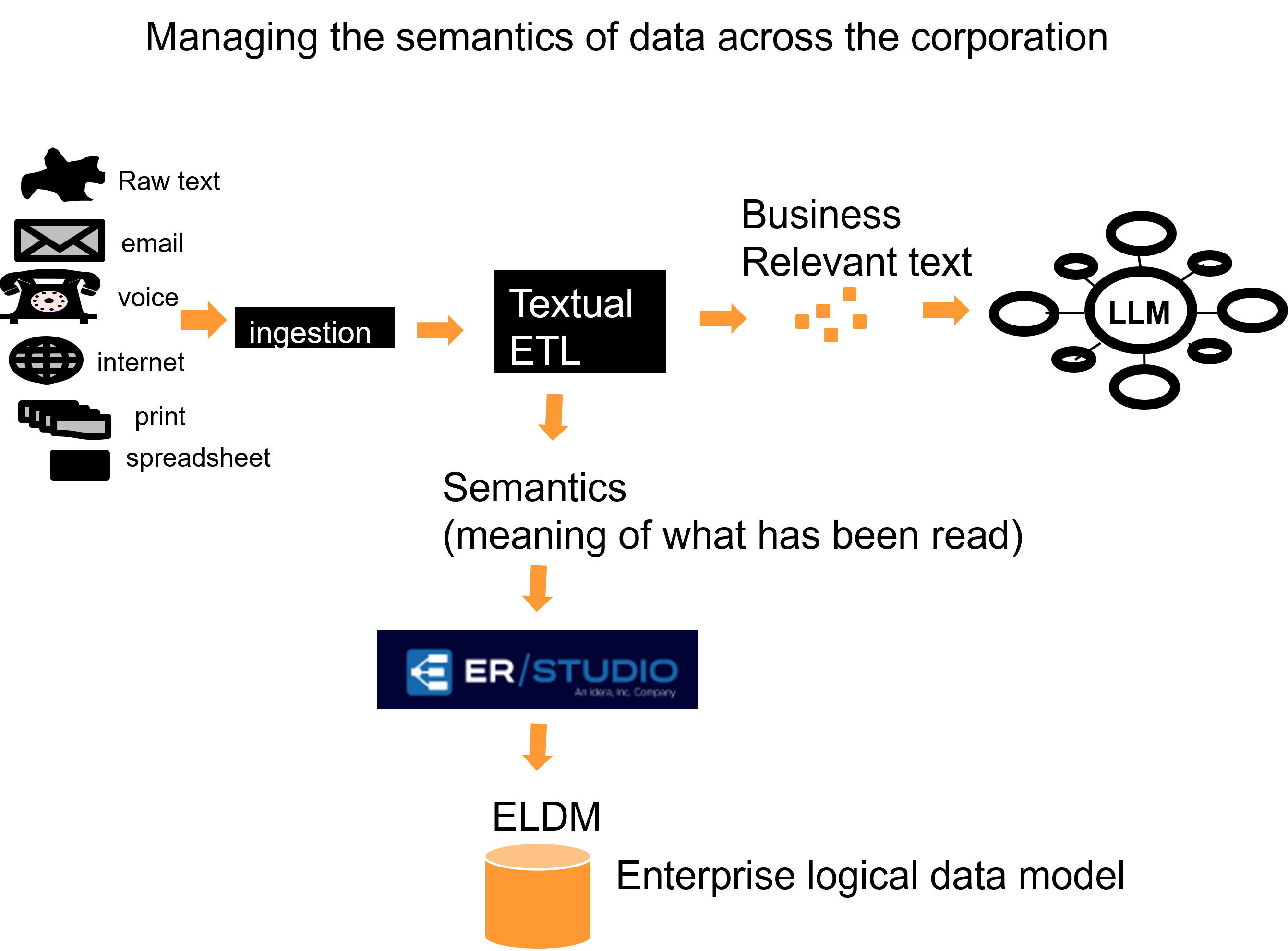
Textual ETL discovers and contextualizes enterprise knowledge, while ER/Studio governs the enterprise meaning of that knowledge through the Enterprise Semantic Backbone. During this process, the extracted information is associated with the governed business concepts defined within the Enterprise Semantic Backbone. This enables enterprise knowledge to inherit the business meaning, governance policies and security classifications associated with those concepts.
At the same time, the discovery of new terminology, business concepts and relationships during Textual ETL provides valuable input into the ongoing evolution of the Enterprise Semantic Backbone. Business experts can review this newly discovered knowledge, determine whether it represents new enterprise concepts or refinements to existing definitions, and incorporate approved changes into the Enterprise Logical Data Model.
In this way, Textual ETL continuously enriches enterprise knowledge while the Enterprise Semantic Backbone provides the authoritative semantic framework through which that knowledge is interpreted. Together they form a closed governance cycle in which enterprise information improves the semantic model, and the semantic model improves the interpretation of enterprise information.
CONCLUSION
Enterprise AI represents a fundamental change in the responsibilities of data management and data governance. In the structured world, governance focused primarily on managing data. In the AI environment, governance must also manage enterprise knowledge, business meaning and the way AI interprets information.
Simply loading large volumes of enterprise information into an AI environment is not sufficient. The information must first be filtered, contextualized and governed. Textual ETL ensures that enterprise AI is provided with trusted, relevant and authoritative information, while the Context Catalog enables that information to be reviewed and managed before it becomes part of the AI knowledge base.
However, trustworthy enterprise AI requires more than authoritative information. It also requires authoritative meaning. The Enterprise Semantic Backbone provides the governed semantic framework through which business concepts are consistently defined and interpreted across structured data, documents and enterprise knowledge. Together, these capabilities provide the semantic unification required for enterprise AI to reason according to the language and business rules of the organization.
The result is an enterprise AI environment that is more efficient, more secure and more trustworthy. Governance is no longer limited to controlling data. It extends to governing the knowledge and meaning upon which enterprise AI depends. As organizations increasingly rely upon AI to support critical business decisions, this combination of trusted information and governed semantics will become an essential capability for every enterprise.
As enterprise AI continues to evolve, organizations that govern both information and meaning will be best positioned to build AI systems that are trusted, explainable and aligned with the business.
ER/Studio is an Idera company. You can find out more about ER/Studio at www.erstudio.com
LLM MGMT builds and manages textual ETL. You can find out more about textual ETL on the web site www.llmmgmt.com.
Thanks, good overview! BTW a few of the paragraphs in the article are duplicates.
ZH